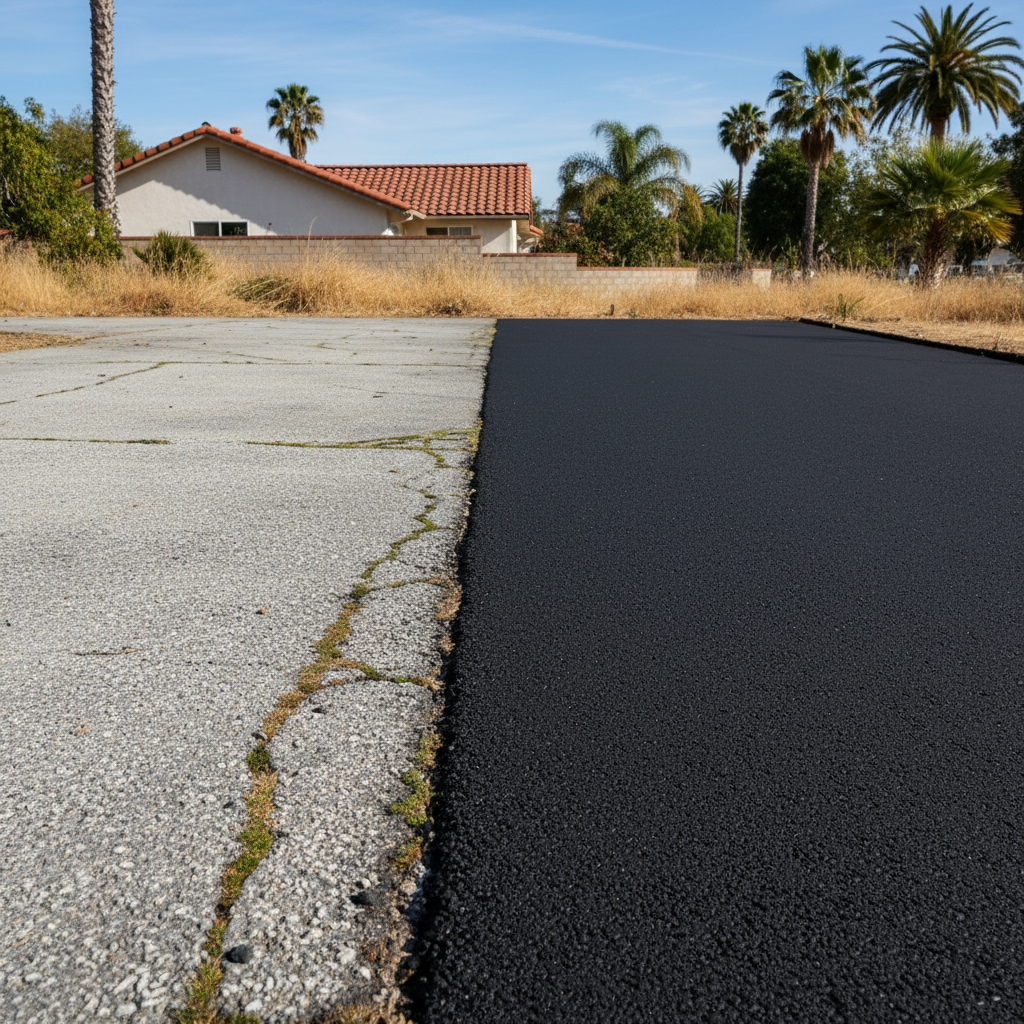
Alright, let's talk asphalt. If you've got a cracked, faded, or just plain tired-looking driveway or parking area, you're probably wondering what your options are. For most folks, it boils down to two main choices: an asphalt overlay or a full depth replacement. I've seen both done countless times across LA, from the hills of Silver Lake to the flatlands of the Valley, and each has its place. But which one is right for your property?
What's an Asphalt Overlay?
Think of an overlay as a fresh coat of paint, but for your asphalt. We're not ripping out the old stuff entirely. Instead, we'll clean and prep the existing surface – that means filling cracks, patching potholes, and sometimes milling down high spots to ensure a smooth, even base. Then, we lay a new layer of asphalt, typically 1.5 to 2 inches thick, right on top of the old one. It's quicker, generally less disruptive, and definitely more budget-friendly upfront.
When Does an Overlay Make Sense?
An overlay is a solid choice if your existing asphalt is mostly in good shape structurally. I'm talking about minor cracking, some fading, or just general surface wear. The key here is that the sub-base – the dirt and gravel underneath the asphalt – needs to be stable. If you've got significant alligator cracking (that looks like a dried-up riverbed), major potholes that go deep, or sections that are sinking or heaving, an overlay is probably just putting a band-aid on a bigger problem. The underlying issues will eventually show through the new layer, and you'll be right back where you started, sometimes even sooner than you'd expect. It's a great option for a property that's been well-maintained and just needs a refresh.
What's Full Depth Replacement?
This is the whole enchilada. With a full depth replacement, we completely remove all the old asphalt and often some of the underlying base material. We're essentially starting from scratch. We'll excavate, re-grade, compact a new aggregate base, and then lay down brand new asphalt, usually in two layers for residential driveways or more for heavier traffic areas. It's a bigger job, takes more time, and costs more money upfront, no doubt about it.
When is Full Depth Replacement Necessary?
If your asphalt is severely deteriorated, if you've got major drainage issues causing constant puddles, or if the sub-base is unstable (which can happen a lot in areas with expansive clay soils, like parts of the San Fernando Valley), then full depth replacement is the way to go. It's also the best option if you're looking to change the grade or layout of your paved area significantly. You're getting a brand new pavement system from the ground up, designed to last for decades if installed correctly and maintained. It gives you a clean slate, and you won't have to worry about old problems resurfacing.
Cost, Durability, and Maintenance
Cost: Overlays are significantly cheaper upfront, often 30-50% less than a full replacement. But remember what I said about band-aids. A full replacement is a larger investment initially.
Durability: A properly installed full depth replacement will always outlast an overlay. It's built to last 20-30 years or more with good maintenance. An overlay might give you 7-15 years, depending on traffic and how good the original base was.
Maintenance: Both options benefit from regular maintenance like crack sealing and sealcoating every few years. For an overlay, staying on top of small cracks is even more crucial to prevent water from getting to the old layer underneath. For a full replacement, good maintenance just extends its already long lifespan.
My Recommendation for Los Angeles Homeowners
Here in Los Angeles, with our intense sun and occasional heavy rains, water intrusion is a big deal. If your existing asphalt has significant structural issues – deep cracks, potholes that are more like craters, or areas that are clearly sinking or heaving – I'd almost always lean towards a full depth replacement. You'll spend more now, but you'll save yourself headaches and potentially more money down the road. It's a long-term solution that gives you peace of mind.
However, if your asphalt is relatively young, has a solid base, and just needs a cosmetic refresh or has minor surface cracking, an overlay can be a fantastic, cost-effective solution. It'll make your property look great and protect the underlying pavement for years.
The best way to figure it out is to have a pro come take a look. We'll assess the condition of your existing asphalt and the underlying base, check drainage, and give you an honest recommendation based on what we see. At Los Angeles Diamond Asphalt, we're not just trying to sell you the most expensive option; we want to give you the right solution that fits your needs and your budget for the long haul.