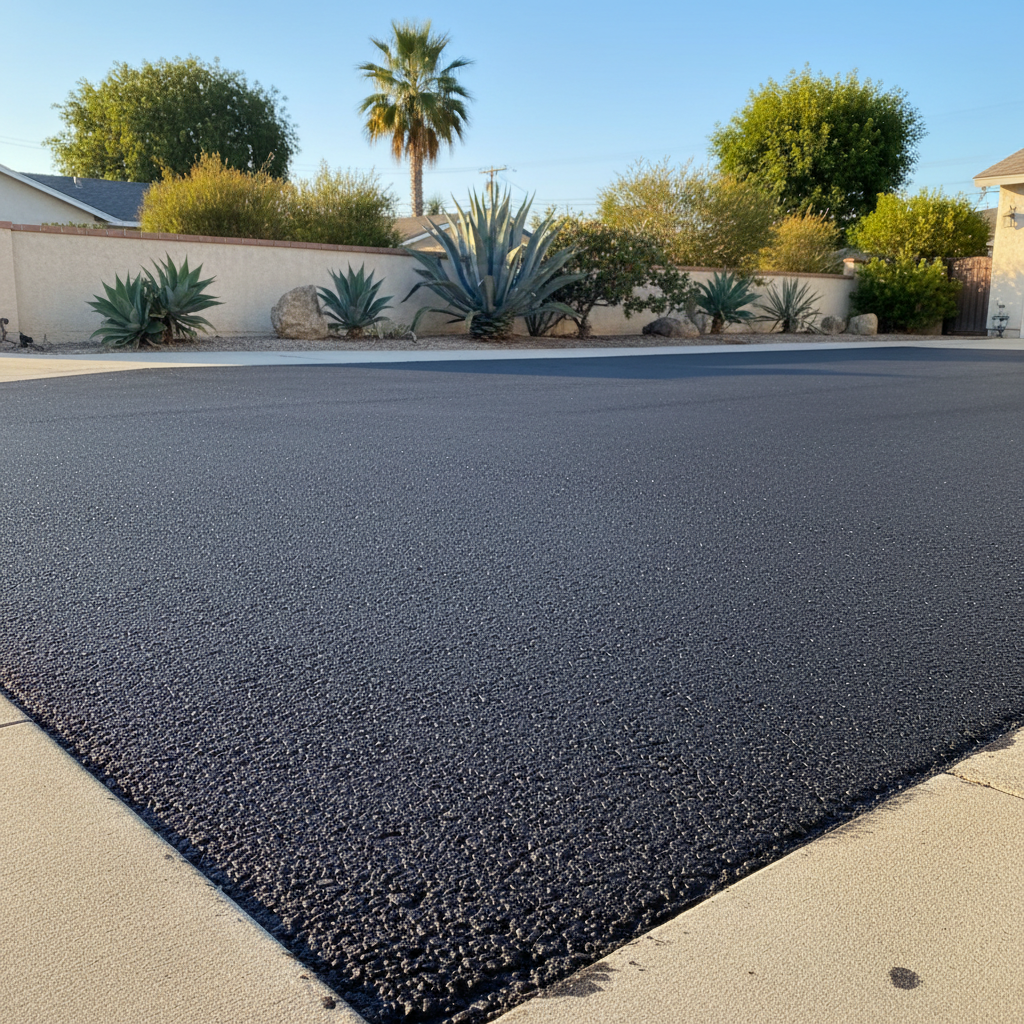
Alright, let's talk about asphalt patching. I get a lot of calls from homeowners all over Los Angeles – from the hills of Hollywood to the flatlands of the Valley – asking about their driveways. They've got cracks, potholes, or just general wear and tear, and they want to know what their options are. Patching is often the first thing that comes to mind, and for good reason. It's a solid solution for specific problems, but it's not a magic bullet for everything. So, I've put together answers to the most common questions I hear about asphalt patching. Let's get into it.
What exactly is asphalt patching?
Simply put, asphalt patching is repairing a damaged section of your existing asphalt pavement. Instead of tearing up your whole driveway, we're focusing on the problem areas. Think of it like putting a band-aid on a cut, but a really strong, durable band-aid. We cut out the bad part – the pothole, the alligator cracking, whatever it is – clean up the area, and then fill it with new hot asphalt mix. The goal is to make that repaired section blend in as much as possible and, more importantly, to stop the damage from spreading and extend the life of your pavement.
When is patching the right solution, and when should I consider something more?
Patching is great for isolated damage. If you've got a few potholes, some small areas of cracking, or a section that's just started to crumble, patching can definitely fix that up. It's cost-effective and relatively quick. It's a good preventative measure too; catching those small issues before they become big, expensive ones. However, if your entire driveway looks like a spiderweb, or if you've got extensive areas of deep cracking, severe rutting, or drainage problems causing widespread deterioration, patching might just be a temporary fix. You'll be patching one spot only to have another pop up right next to it. In those cases, we'd probably be talking about an overlay or even a full replacement. It all depends on the overall condition of your asphalt.
How long does an asphalt patch typically last in Los Angeles?
That's a good question, and the answer isn't always straightforward because it depends on a few things. A properly installed patch, using quality materials and good compaction, can last for several years – sometimes even five to ten years or more. But here in LA, we've got some unique challenges. Our intense sun can really bake asphalt, and the constant expansion and contraction from temperature swings, especially during our hotter months, puts stress on any repair. Heavy traffic, especially if it's a commercial driveway, will also shorten a patch's lifespan. The underlying soil conditions play a role too; if you've got unstable soil, common in some of our hillside communities, that can contribute to new cracks forming around the patch. A patch is only as good as the foundation it's sitting on and the care it receives after installation. Regular sealcoating can help protect both the original asphalt and the patches.
What's the process for patching a pothole or crack?
Okay, so you've got a pothole. Here's how we typically handle it. First, we mark out the area to be repaired, usually a square or rectangular section around the damage. We want clean, straight edges. Then, we cut out the damaged asphalt using a saw or a jackhammer, making sure to go deep enough to remove all the compromised material. We clean out all the debris – dirt, loose asphalt, anything that shouldn't be there. This is crucial for adhesion. Sometimes, we'll apply a tack coat, which is an asphalt emulsion that helps the new asphalt stick to the old. Then, we fill the hole with hot asphalt mix, usually in layers if it's a deep one, and compact it thoroughly with a vibratory plate compactor or roller. The goal is to get it dense and level with the surrounding pavement. For cracks, it's a bit different; we clean them out and fill them with a hot rubberized crack sealant, which stays flexible and moves with the pavement.
Can I do asphalt patching myself, or should I hire a pro?
Look, you can buy cold patch asphalt at any hardware store. For a tiny, shallow pothole in a low-traffic area, you might be able to get by with a temporary DIY fix. But I'm going to be honest with you: it's rarely a long-term solution. Cold patch doesn't compact as well as hot mix, and it often breaks down quickly, especially with our LA traffic and sun. For a durable, lasting repair that actually prevents future problems, you really need professional equipment and expertise. We're talking about heavy-duty saws, compactors, and knowing how to work with hot asphalt, which isn't something you want to mess with if you don't know what you're doing. Plus, a professional company like Los Angeles Diamond Asphalt knows how to properly prepare the base, ensure good drainage, and use the right materials for our local conditions. You'll save money in the long run by getting it done right the first time.
How much does asphalt patching cost in Los Angeles?
This is probably the most common question I get. The cost of asphalt patching varies a lot, depending on several factors. The size and depth of the area needing repair are big ones, obviously. A small, shallow patch will cost less than a large, deep one. The type of damage also matters; cutting out and filling a pothole is different from crack sealing. Access to the area can play a role too; if it's a tricky spot, it might take more time and effort. Material costs fluctuate, and labor rates in LA are what they are. Generally, you're looking at a per-square-foot or per-patch price. It's always best to get a free estimate from a reputable contractor who can come out, assess your specific situation, and give you an accurate quote. Don't just go for the cheapest bid; make sure they're using quality materials and proper techniques. A cheap patch that fails in six months isn't really cheap at all.
What's the best way to maintain my asphalt after it's patched?
Once you've got those patches in, you want to protect your investment. The best thing you can do is regular sealcoating. I recommend sealcoating every 2-3 years for most residential driveways here in Los Angeles. Sealcoat acts like sunscreen for your asphalt, protecting it from UV rays, water penetration, and oil spills. It also helps to keep the entire surface, including your patches, looking uniform and extends its life. Make sure to keep heavy vehicles off your driveway if it's not designed for them, and clear away any oil or gas spills immediately. Good drainage is also key; make sure water isn't pooling on your pavement, especially around the patched areas. If you see new small cracks forming, address them quickly with crack sealing before they turn into bigger problems. A little proactive maintenance goes a long way in keeping your asphalt in good shape.